Ridge-walking in concrete prehistory.
Dinosaur Park

Rapid City, South Dakota
Concrete monsters lord over a city in the Black Hills -- and they may rule forever. Generations of children have visited the hilltop Dinosaur Park. The immensity of the Brontosaurus, the fearsome jaws of the T-Rex... indelibly burned into tiny, soft skulls. When dinosaurs walked the earth, they looked like this!
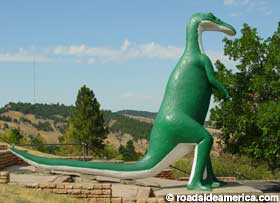
Well, maybe not quite. As an early entrant into the world of dinosaur tourist attractions, the giant creatures sculpted here are what dinosaurs were thought to look like in 1936. And there's an undeniable cartoony style to these bright green, life-size sculptures.
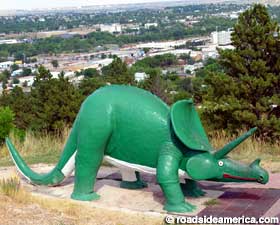
Modern depictions differ, of course. Yet the bright green thunderbeasts above Rapid City still satisfy legions of little crunchers.
The five sculptures were a Depression-era project cooked up by the Rapid City Chamber of Commerce, who saw them as a way to make jobs, get the government to pay for it, and capitalize on the flood of visitors to nearby Mount Rushmore. Emmit A. Sullivan is credited as the sculptor -- the same artistic genius who created the Christ of the Ozarks and the dinosaurs at Dinosaur World in Arkansas.
The dinos were dedicated on May 22, 1936, on the crest of a hill overlooking the city. The five figures -- an Apatosaurus, Triceratops, Stegasaurus, Tyrannosaurus Rex., and a Brontosaurus, were fashioned from concrete over iron pipe frameworks.
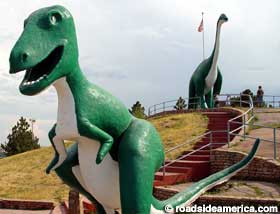
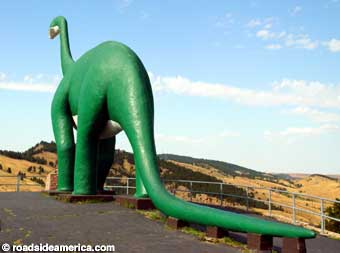
The Brontosaurus is 80 feet long and 28 feet high, standing at the highest point of the ridge. The other dinos are situated along walkways straddling the ridge and down the slope to the parking lot.
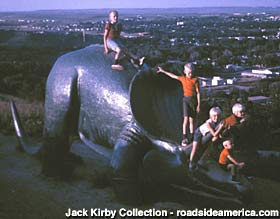
They've spent 80+ years as part of this free public park. It is probably the only dino park that encourages kids to climb on all its displays. This may also explain the rounded and worn edges -- nothing a regular paint job can't remedy.
We first visited as tykes on a family trip, and clamored over the Brontosaurus tail, piled onto the Stegosaurus, and may have attempted to pry loose the horns from the Triceratops.
Decades later, Dinosaur Park looked about the same to our discerning, offbeat travel scribe eyes. We visited the gift shop, then climbed the steep stairs from the parking lot. The dinosaurs, bright green and gleaming in the sun, looked happy as ever.

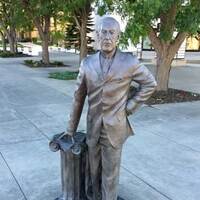 Statue #28: Woodrow Wilson
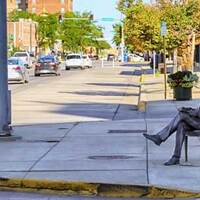 Statue #13: Millard Fillmore
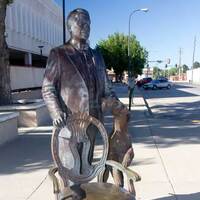 Statue #29: Warren Harding