The Crayola Experience: Crayola Factory
Easton, Pennsylvania
Everyone loves factory tours -- except for the corporations that own the factories. Child safety is a particular worry if the factory makes something that's sold to kids.
So it's not surprising that the Crayola factory tour, once a highlight of anyone's trip to Easton, Pennsylvania, became "The Crayola Factory," a downtown attraction that in fact was not a factory at all. Over a decade later, the attraction had morphed yet again into "The Crayola Experience," a purposefully vague title for a place that's cheerfully soft-edged and nontoxic.
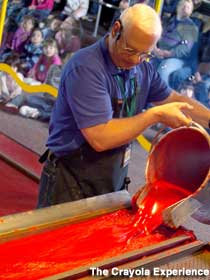
Crayola has moved some of the machinery from the Factory to the Experience to create a tour-lite demonstration area. Visitors can watch Crayola workers ("Crayonologists") pour buckets of melted wax into molds to make smoking-hot Crayola crayons, all child-safe behind plexiglass shields and warning signs. Video crayon characters swap banter with the live employees, and downtime is filled with old Crayola commercials. On our last visit, one worker told us that we could eat 3,500 crayons and still not get as many toxins as are in a single glass of city drinking water.
Above the factory demonstration, a large electronic counter flashes the ever-climbing quantity of crayons in the world, nearing 146 billion when last we peeked.
One highlight of the old tour was the unmistakable, reassuring smell of warm crayons. Crayola brings that back in an area titled "Crayola Meltdown," where kids can dip long Q-tips into pots of melted crayon soup -- child-safe behind plexiglass -- to make their own art. We were told that the pots aren't particularly hot, since Crayons have a surprisingly low melting point, something that any parent with a clothes dryer knows all too well.
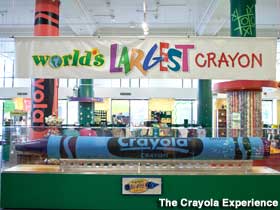
The Crayola Experience is mostly a series of fun stations -- some that charge extra -- that promote kid activities using Crayola products. There's also a small Hall of Fame that enshrines eight of the colors retired by Crayola, and, in the cafe, the World's Largest Crayon, a 15-foot-long, 1,500-pound behemoth made in 2003 from scrap "leftolas" mailed in by kids from around the country.
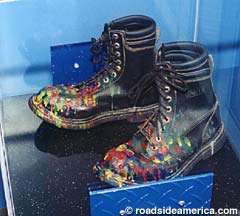
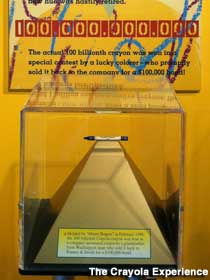
Crayola's recognition of its own history can be found in the "Crayola Chronology," where visitors can see the paraffin-spattered shoes of Emerson Mosler, who made an estimated 1.4 billion crayons during his 37 years at the Crayola plant. Also here is the sweater worn by Mr. Rogers when he molded the 100 billionth Crayola crayon in 1996. The actual crayon is displayed under plexiglass like a precious moon rock. An accompanying sign notes that it was won as a prize by a grandmother in a contest, and Crayola had to pay her $100,000 to get it back.

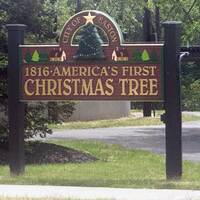 America's First Christmas Tree
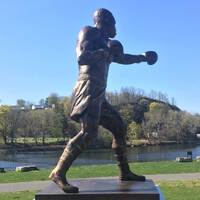 Larry Holmes: The Easton Assassin
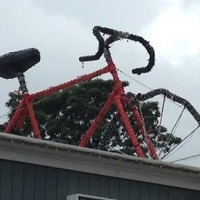 Large Bicycle